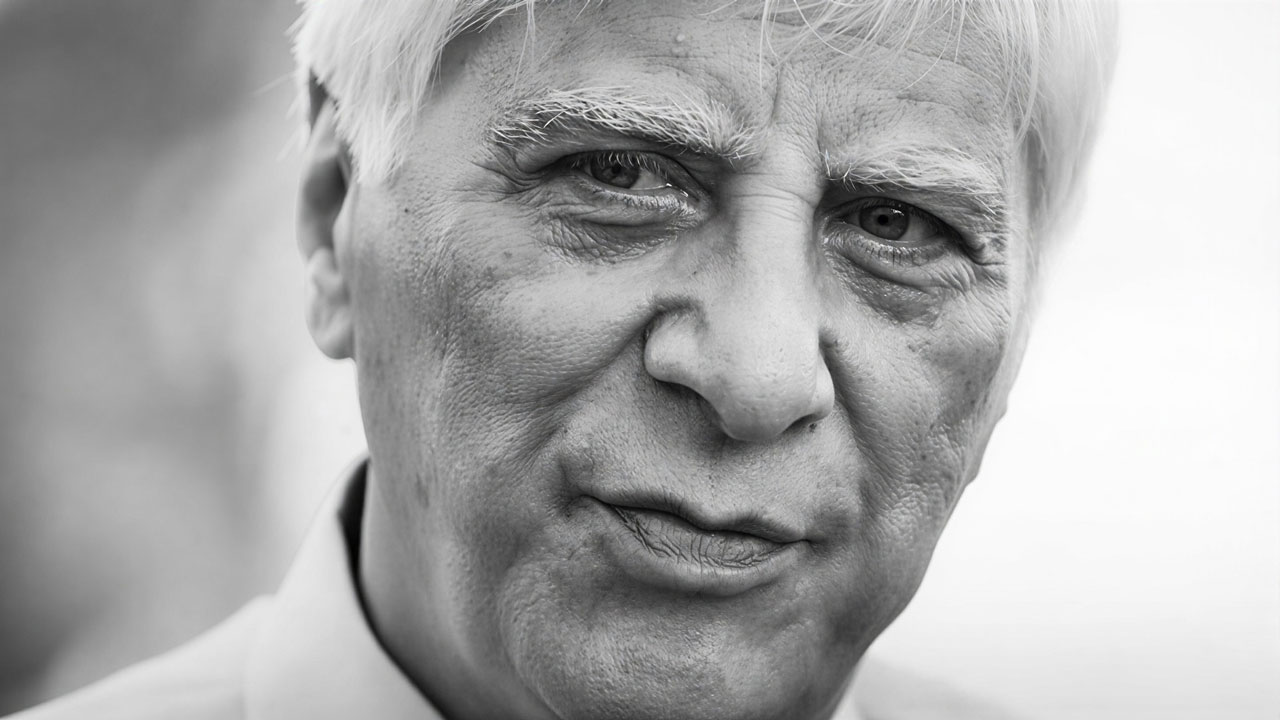
The Iranian art community is in mourning. Bahram Beyzaie, the prominent playwright, director, and scholar, has left the world stage at the age of 87 in exile. A man who dedicated his life to reviving myths and fighting oblivion has finally become immortal in the “Court of History”.
By: Shahab Mirzaei, Masoud Azar
The End of an Era: From Stage to Myth
Bahram Beyzaie passed away on Friday, December 26, 2025 (Dey 5, 1404) in the United States. Critics believe he erased the boundaries between writing and directing, creating art that consistently stood against the erasure of marginalized voices and the oversimplification of history. His works, whether on the theater stage or the silver screen, served as a permanent “Court of History” where truth is the result of conflicting narratives.
“My Religion is Culture”
Born into a literary family in Tehran, Beyzaie sought his roots in Iranian culture. Regarding his identity, he left behind a memorable quote:
“My father and mother were Baha’i… but my religion is culture. Religion is a personal belief and concerns no one else in the world.”
His monumental research, such as the book “Theatre in Iran”, challenged the prevailing notion that “there was no theater in Iran,” proving that the roots of Iranian performance lie in ancient rituals and Tazieh.
Beyzaie’s Cinema: A Downpour of Symbols
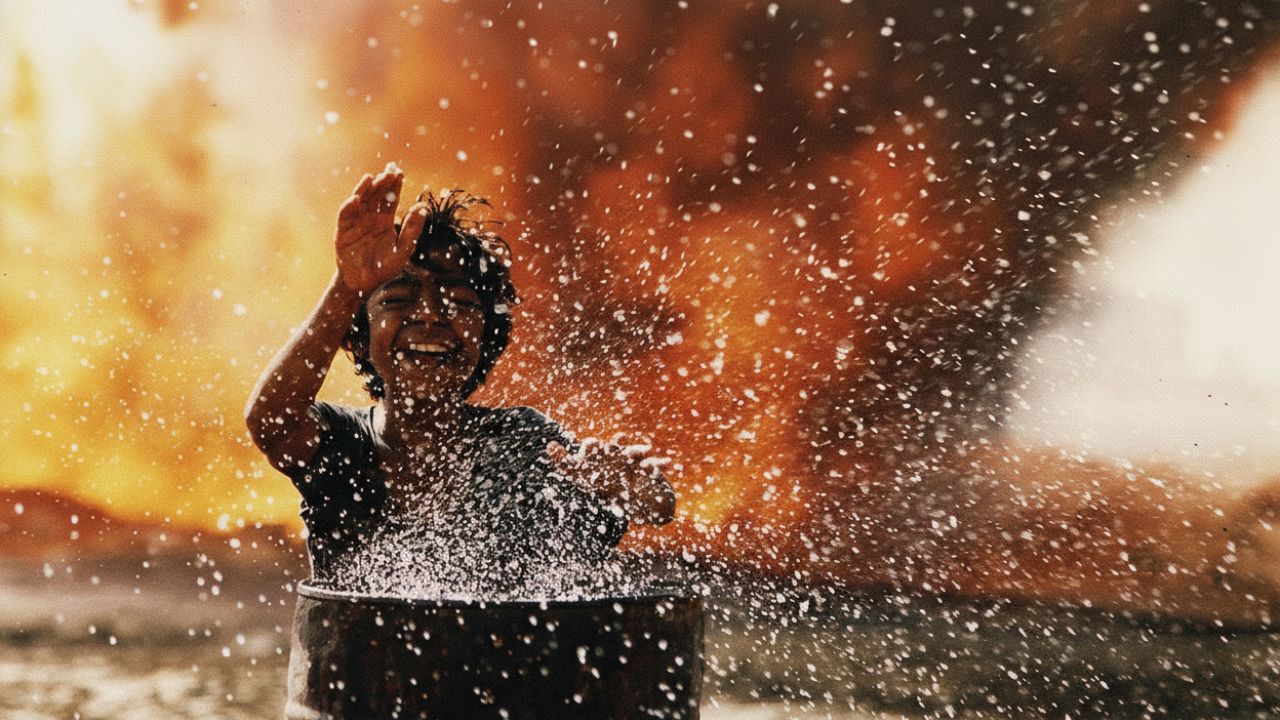
Beyzaie became a trendsetter with his film “Downpour” (Ragbar), turning metaphor into the primary language of his cinema. However, his masterpieces faced significant hurdles after the revolution.
- Death of Yazdgerd: A narrative where history is not a definitive fact, but a balance of power.
- Bashu, the Little Stranger: An anti-war film, banned for years, depicting the acceptance of “the other” and the shared suffering of a Gilak mother and a southern boy.
- Travellers (Mosaferan): A film etched in cinema history with Homa Rousta’s chilling dialogue: “We are going to Tehran for a wedding… We won’t reach Tehran. We will all die.”
- Killing Mad Dogs (Sagkoshi): The highest-grossing film of 2001, offering a dark portrayal of corruption and a patriarchal society.
Women: Subjects of History
In Beyzaie’s world, women are neither marginalized nor passive. From “Tara” in Ballad of Tara to “Na’i” in Bashu, the woman is the one who sees, understands, and resists. Beyzaie believed that official Iranian history had erased women, and art had a duty to compensate for this absence.
Exile: “A Life Spent Waiting to Hear ‘No'”
His departure from Iran was not a free choice. Years of censorship and repeated cancellations led him to Stanford University. He described this situation in the bitterest of terms:
“I do not imagine that I have gained any significant opportunity by leaving Iran… It is not worth a penny compared to what I lost; a lifetime spent waiting to hear ‘No’.”
Nevertheless, he never severed his ties with Iran and always waited for “the skies of Tehran to clear”—a hope that, with his passing, has now taken on the color of regret.