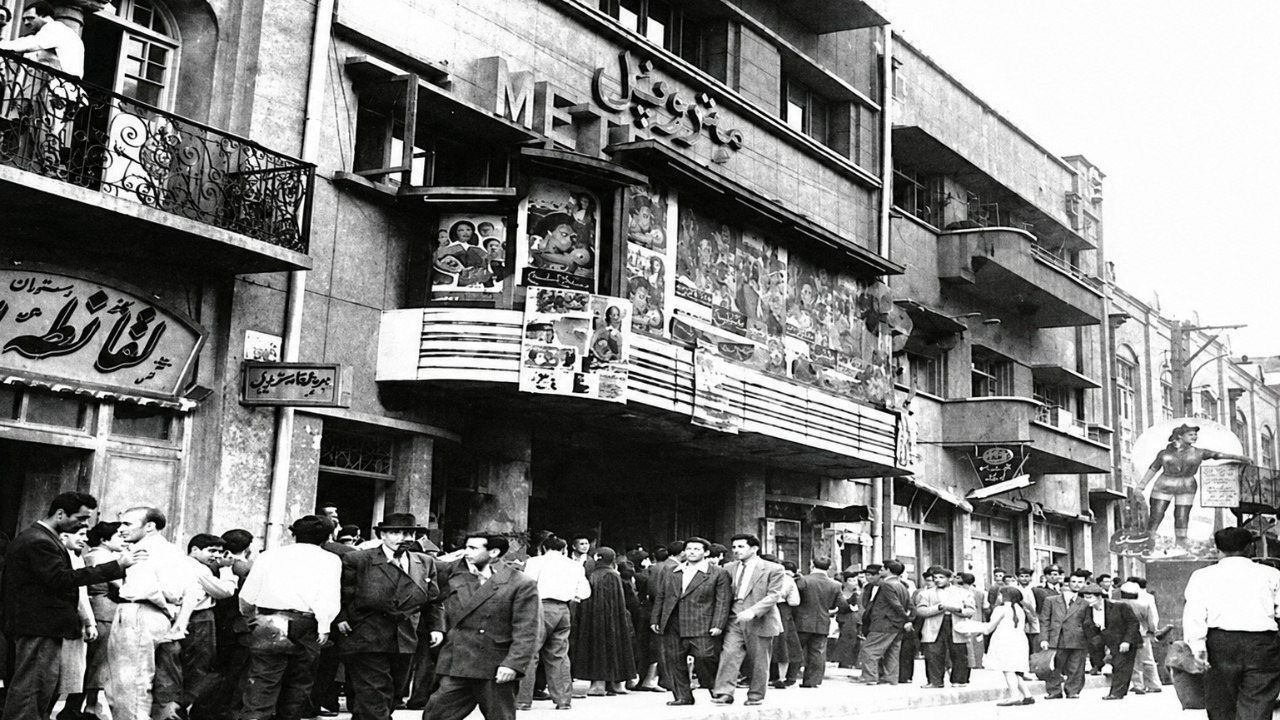
The history of film festivals in Iran is inextricably linked with the country’s turbulent political landscape. The spark for Iran’s very first film festival emerged during an era marked by profound national shock and cultural transition.
In the tense aftermath of the August 1953 coup d’état, intellectual and cinematic circles faced widespread disillusionment and censorship. Seeking cultural renewal, film journalists mobilized to create a dedicated public platform for cinema, culminating in Iran’s first formal Cinema Congress in early 1955.
The 1955 Golrizan Festival: The First National Competition
Iran’s first domestic film festival, known as the Golrizan Festival, took place March 13–19, 1955 (Esfand 1333 SH) at the Metropole Cinema on Tehran’s famed Lalehzar Street. It marked the first time early Iranian cinema was formally judged and celebrated with awards.
Historic 1955 Award Winners
- Best Film: End of Sorrows (Payan-e Ranj-ha)
- Best Director: Samuel Khachikian for Crossroads of Incidents (Chahar Rah-e Havades)
- Best Actor (First Acting Award in Iranian Cinema): Arman Hovsepian
- Best Actress: Mahin Deyhim for End of Sorrows
- Special Honors: Houshang Beheshti (Bloody Moonlight) and pioneer actress Monir Taslimi
Toghrol Afshar: Pioneer of Foreign Film Festivals
While the Golrizan Festival celebrated domestic releases, the broader history traces back to Toghrol Afshar, widely recognized as Iran’s first serious film critic.
In 1950, at just 17 years old, Afshar launched a curated foreign film showcase at Crystal Cinema on Lalehzar Street. Prior to his initiative, foreign films were exclusively screened within embassy compounds. Despite political instability, he mounted multiple editions, culminating in July 1954 with selections from nine nations alongside the launch of his critical magazine, Peyk-e Cinema.
A Brief, Tragic Legacy
Afshar, the nephew of iconic modern Persian poet Nima Yushij, pioneered serious film criticism in Iran starting in 1948. Beyond criticism, he was a vocal advocate for film culture and audience discipline, notably signing the landmark 1953 petition defending Jean Renoir’s The River against reactionary protests.
His trailblazing career was tragically cut short. On August 19, 1956, at age 23, Afshar drowned while swimming in the Caspian Sea near Babolsar. His epitaph endures as a testament to his legacy:
“Here lies Toghrol Afshar, Iran’s first film critic, who brought his serene and noble soul to rest.”