What Do We Know About the Iranian New Wave?
The term “New Wave Cinema” originally refers to a major shift in filmmaking in the 1950s in France, where young directors sought to revolutionize all cinematic elements and create a new artistic movement.
The Emergence of the New Wave in Iranian Cinema
In Iran, as the production of commercial “Film-Farsi” increased, a new generation of filmmakers introduced a fresh cinematic movement known as the Iranian New Wave. This shift redirected Iranian cinema away from formulaic commercial films toward works such as “Qeysar,” “Goodbye Friend,” and “The Cow.”
The movement began with films like “The House Is Black” by Forough Farrokhzad, “The Serpent’s Skin” by Hajir Darioush, “Brick and Mirror” by Ebrahim Golestan, and “The Night of the Hunchback” by Farrokh Ghaffari—works made in response to Film-Farsi. These films marked a major leap toward international recognition.
Social Themes in New Wave Iranian Cinema
Social mobility was a key theme in pre-revolution New Wave films. Economic and social transformations, along with the government’s modernization policies, created new social tensions that filmmakers critically explored.
Parallel Cinematic Currents in the 1960s
Iran’s “Free Cinema” Movement
By the late 1960s, two major movements had emerged. The first, calling itself “Free Cinema,” aimed to imitate Western modernist aesthetics—largely influenced by the cultural programs supported by Farah Pahlavi. Many young artists, inspired by European art cinema, started making experimental works.
The Rise of the Iranian New Wave
Opposed to Free Cinema stood the developing Iranian New Wave, which soon gained the attention of intellectuals and literary figures—and occasionally attracted audiences at the box office. A defining characteristic of the New Wave was its deep connection to contemporary Iranian literature.
The Arrival and Early Films of the New Wave
In the late 1950s, Iranian cinema was dominated by formulaic commercial films, until the influence of the French New Wave entered the country. “South of the City” by Farrokh Ghaffari in 1958 marked the birth of the movement, and by the late 1960s, films like “Qeysar” and “The Cow” pushed it to its peak.
Major Filmmakers of the Iranian New Wave
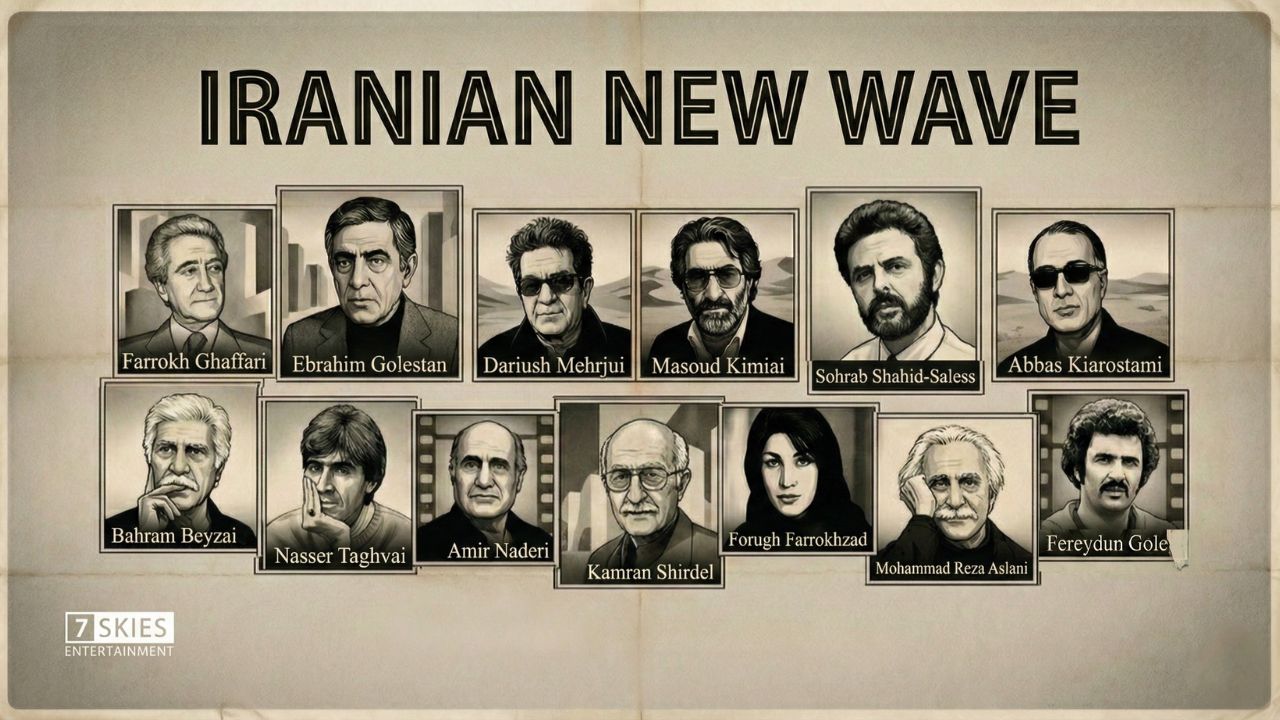
Key figures include Farrokh Ghaffari, Ebrahim Golestan, Fereydoun Rahnema, Davoud Molapour, Dariush Mehrjui, Masoud Kimiaei, Khosrow Haritash, Amir Naderi, Jalal Moghadam, Nasser Taghvai, Ali Hatami, Kamran Shirdel, Abbas Kiarostami, Parviz Kimiavi, Sohrab Shahid Saless, Fereydoun Goleh, Mohammad Reza Aslani, and Forough Farrokhzad.
The Continuation of the Movement
Most of these filmmakers have passed away, with only a few—such as Bahram Beyzaie, Nasser Taghvai, Bahman Farmanara, Amir Naderi, Mohammad Reza Aslani, and Masoud Kimiaei—still living.
The New Wave Versus Commercial Cinema
During the 1970s, Iranian cinema leaned toward shallow commercial films, often centered around cabaret motifs and melodramatic tropes. The New Wave disrupted this trend and redirected cinema toward intellectual and socially conscious works.
The Legacy of Iranian New Wave Directors
Generations of audiences discovered cinema through the films of Mehrjui, Kimiaei, Beyzaie, Kiarostami, and others. Many emerging filmmakers entered the field inspired by these influential voices.
Fluctuations in the Works of New Wave Filmmakers
Although the filmmakers produced masterpieces, their careers also included weaker works. Nevertheless, their role in shaping thoughtful, non-commercial Iranian cinema before the revolution remains critically important.
Iconic Films of the Iranian New Wave
Notable works include “Brick and Mirror” by Ebrahim Golestan, “A Simple Event” and “Still Life” by Sohrab Shahid Saless, “Downpour” and “The Crow” by Bahram Beyzaie, “The Traveler” and “The Report” by Abbas Kiarostami, “The Mongols” by Parviz Kimiavi, and “The Curse” by Nasser Taghvai.